Introduction
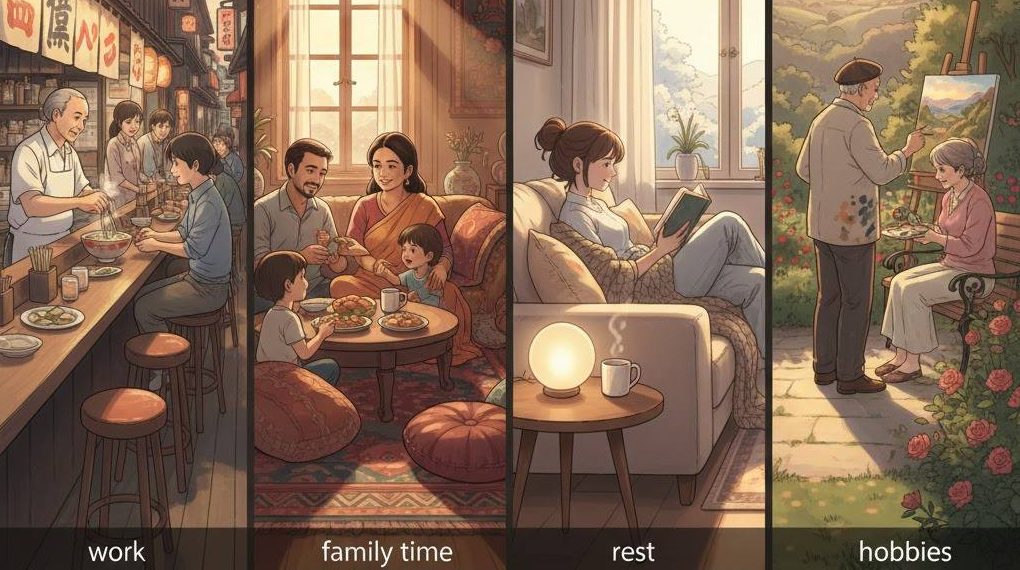
Work-life balance refers to the way people manage their professional responsibilities alongside personal life, family, hobbies, and rest. Around the world, approaches to work-life balance vary widely, influenced by culture, social norms, economic conditions, and labor laws. In some countries, long working hours and high dedication are common, while in others, personal time, leisure, and family are prioritized. Understanding these differences is important for global employees, international businesses, and anyone working in multicultural environments. A healthy work-life balance improves productivity, reduces stress, and enhances overall well-being. Awareness of cultural approaches helps individuals adapt, respect local practices, and create a fulfilling professional and personal life.
Understanding Work-Life Balance
Work-life balance is more than dividing hours between work and leisure. It includes mental and emotional well-being, workplace flexibility, and cultural attitudes toward personal time.
Why It Matters
- Supports physical and mental health
- Increases job satisfaction and motivation
- Reduces burnout and stress
- Encourages stronger family and social relationships
Cultures with strong support for personal life often see higher overall happiness and employee retention. Recognizing cultural approaches helps global workers navigate expectations effectively.
Work-Life Balance in High-Work Cultures
Some cultures emphasize dedication, long hours, and strong commitment to work.
Common Characteristics
- Extended working hours and minimal breaks
- Priority on career achievements
- Strong professional identity
Countries with high-work expectations may include parts of East Asia, such as Japan and South Korea. Employees often feel a duty to their company, sometimes at the expense of personal time.
Benefits and Challenges
- Benefits: Career growth, strong work ethics, professional respect
- Challenges: Higher stress levels, limited family or leisure time, potential burnout
In these cultures, companies are gradually introducing policies to support work-life balance, such as flexible hours or remote work.
Work-Life Balance in Balanced Cultures
Other cultures emphasize a balance between professional responsibilities and personal life.
Common Characteristics
- Standard working hours with clear boundaries
- Focus on personal time and family
- Encouragement of leisure and vacation
Examples include many European countries such as Germany, the Netherlands, and Sweden. Employees are expected to leave work on time, take vacations, and maintain hobbies outside work.
Benefits and Challenges
- Benefits: Reduced stress, higher satisfaction, strong personal relationships
- Challenges: May feel slower-paced for those from high-work cultures
Balanced cultures often have legal protections for vacation time, parental leave, and work flexibility, supporting long-term well-being.
Flexible Work Cultures
Some workplaces, especially in modern global industries, emphasize flexibility rather than strict schedules.
Key Features
- Remote work and flexible hours
- Focus on productivity rather than presence
- Trust-based evaluation of work
Countries with emerging tech industries or multinational companies often adopt flexible work cultures. Employees are empowered to manage their time while meeting professional goals.
Advantages
- Greater autonomy and personal freedom
- Reduced commuting stress
- Adaptable to family and personal needs
Flexibility encourages creativity and efficiency but requires discipline and clear communication to succeed.
Social and Cultural Attitudes Toward Personal Time
Cultural norms influence how personal time is valued and how employees are expected to respond to work demands.
Attitudes Toward Vacation
- Some cultures encourage taking full holidays and disconnecting from work
- Others may view extended time off as unusual or irresponsible
Family and Social Life
- Strong family-oriented cultures prioritize time with relatives
- Career-focused cultures may place personal and social activities secondary to work
Respecting these cultural attitudes is essential for international workers and managers coordinating global teams.
Adapting to Different Work-Life Expectations
Successfully navigating work-life balance across cultures requires awareness and flexibility.
Helpful strategies include:
- Observing local work habits and norms
- Setting personal boundaries respectfully
- Communicating availability clearly with colleagues
- Using flexible policies when available
Adapting does not mean compromising personal values but finding a way to thrive while respecting local culture.
Conclusion
Work-life balance differs widely across cultures, reflecting values, social expectations, and workplace norms. High-work cultures prioritize dedication, balanced cultures emphasize personal time, and flexible workplaces focus on autonomy and productivity. Understanding these differences helps employees, managers, and organizations navigate expectations, reduce stress, and create positive professional environments. By observing cultural practices and adapting thoughtfully, individuals can maintain both career success and personal well-being. Respecting work-life balance across cultures promotes healthier, more productive, and fulfilling work experiences in an increasingly connected global world.