➡️ INTRODUCTION
→ Dining etiquette varies greatly across the world, reflecting the culture, traditions, and social norms of each country. While what is considered polite in one region may be seen as rude in another, understanding these rules can enhance travel experiences, build positive impressions, and prevent embarrassing situations. From the way people use cutlery to table manners, gestures, and conversation etiquette, knowing the expectations of different cultures is essential. This guide provides practical tips and step-by-step advice on dining etiquette worldwide, helping readers eat confidently, respect local customs, and enjoy meals in restaurants, homes, and social gatherings without awkward mistakes.
➡️ Key Points / Benefits
→ Following proper dining etiquette ensures respectful interactions with hosts and locals.
→ Helps travelers avoid cultural misunderstandings and awkward situations.
→ Improves confidence during meals in restaurants, social events, and business settings.
→ Shows cultural awareness and appreciation for local traditions.
→ Enhances overall travel experiences by promoting smooth, enjoyable dining.
→ Provides practical knowledge to navigate formal and casual dining situations.
🔵 1️⃣ → Table Manners Across Cultures
→ Table manners differ widely depending on cultural norms. In some countries, it’s polite to keep your hands visible on the table, while in others, resting elbows is acceptable. Using utensils correctly, chewing quietly, and not talking with a full mouth are universal practices in formal settings. Practical tips:
- Observe locals for cues on posture and utensil use.
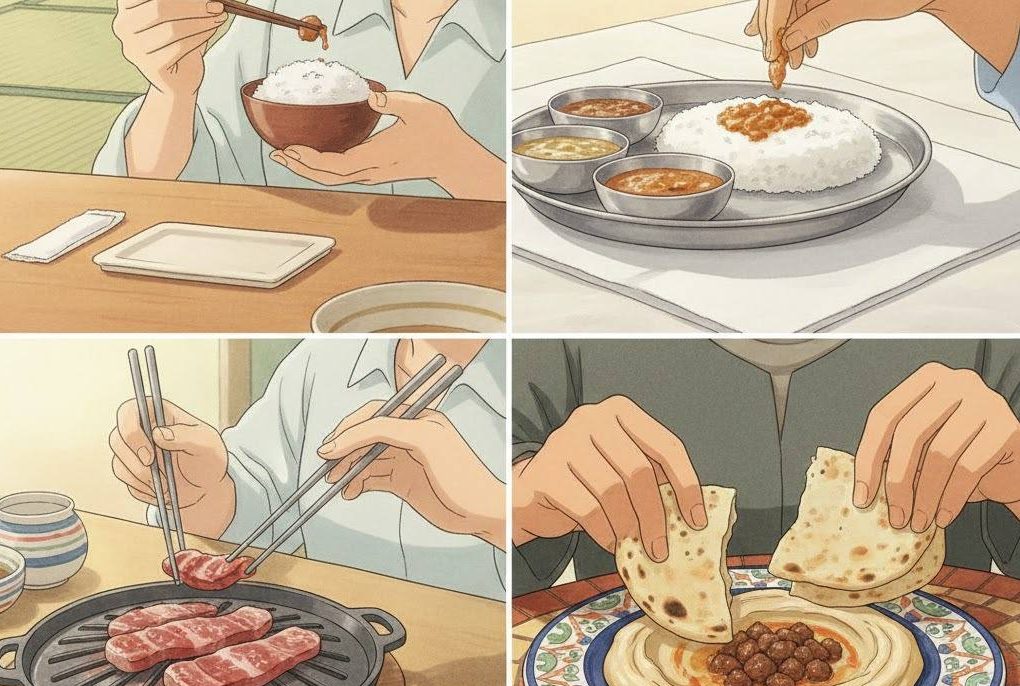
- In Asian countries, using chopsticks properly is essential; avoid pointing or sticking them upright in food.
- In Europe or the US, forks and knives follow specific rules during formal meals.
Understanding these nuances ensures polite behavior and respect for dining customs.
🔵 2️⃣ → Use of Cutlery and Eating Styles
→ Different cultures have unique ways of eating and handling utensils. For example:
- Western countries: Knife in the right hand, fork in the left while cutting, and alternating hands when eating.
- India and parts of the Middle East: Eating with the right hand is customary; left hand is avoided for food.
- Japan and Korea: Chopsticks are common; avoid pointing or playing with them.
- Some cultures eat family-style, sharing dishes from the center of the table.
Learning and practicing these styles prevents offense and shows respect for local traditions.
🔵 3️⃣ → Conversation and Behavior During Meals
→ Mealtime behavior is often as important as eating itself. In some cultures, meals are quiet and reflective; in others, lively conversation is encouraged. Tips include:
- Wait for hosts to start eating before you begin.
- Avoid controversial topics unless invited to discuss.
- Compliment the host on food to show appreciation.
- Chew quietly and avoid gestures that may be considered rude.
Polite conversation and attentive behavior create positive impressions and enhance social dining experiences.
🔵 4️⃣ → Paying and Tipping Etiquette
→ Handling bills and tips varies across cultures. In the US, leaving 15–20% tip at restaurants is standard, while in Japan, tipping can be considered rude. Practical advice:
- Check if service charge is included in the bill.
- Round up the bill or leave a small tip where customary.
- In countries with communal meals, sometimes hosts pay, and guests are expected to bring a small gift.
Understanding payment customs avoids awkward situations and shows cultural awareness.
🔵 5️⃣ → Avoiding Common Dining Mistakes
→ Common errors can be easily avoided by following simple guidelines:
- Don’t reach across others for dishes; ask politely for them to be passed.
- Avoid wasting food in cultures where it is considered disrespectful.
- Be cautious with gestures like pointing, giving thumbs-up, or licking fingers, as they may offend in some regions.
- Dress appropriately for formal or cultural meals.
Observing these practices ensures respect, comfort, and positive interactions with hosts or locals.
➡️ CONCLUSION
→ Dining etiquette is a vital aspect of cultural awareness and respectful travel. By understanding table manners, utensil use, conversation rules, tipping practices, and common mistakes, travelers can enjoy meals confidently and courteously. Following local customs enhances social interactions, shows appreciation for traditions, and creates lasting positive impressions. Preparing in advance, observing locals, and practicing good behavior ensures smooth dining experiences in restaurants, homes, and social events. Respectful dining etiquette is a small yet significant way to demonstrate cultural sensitivity, enjoy global cuisine fully, and make travel experiences more enjoyable and memorable.